Irish Wolfhounds – Is this the breed you truly want?
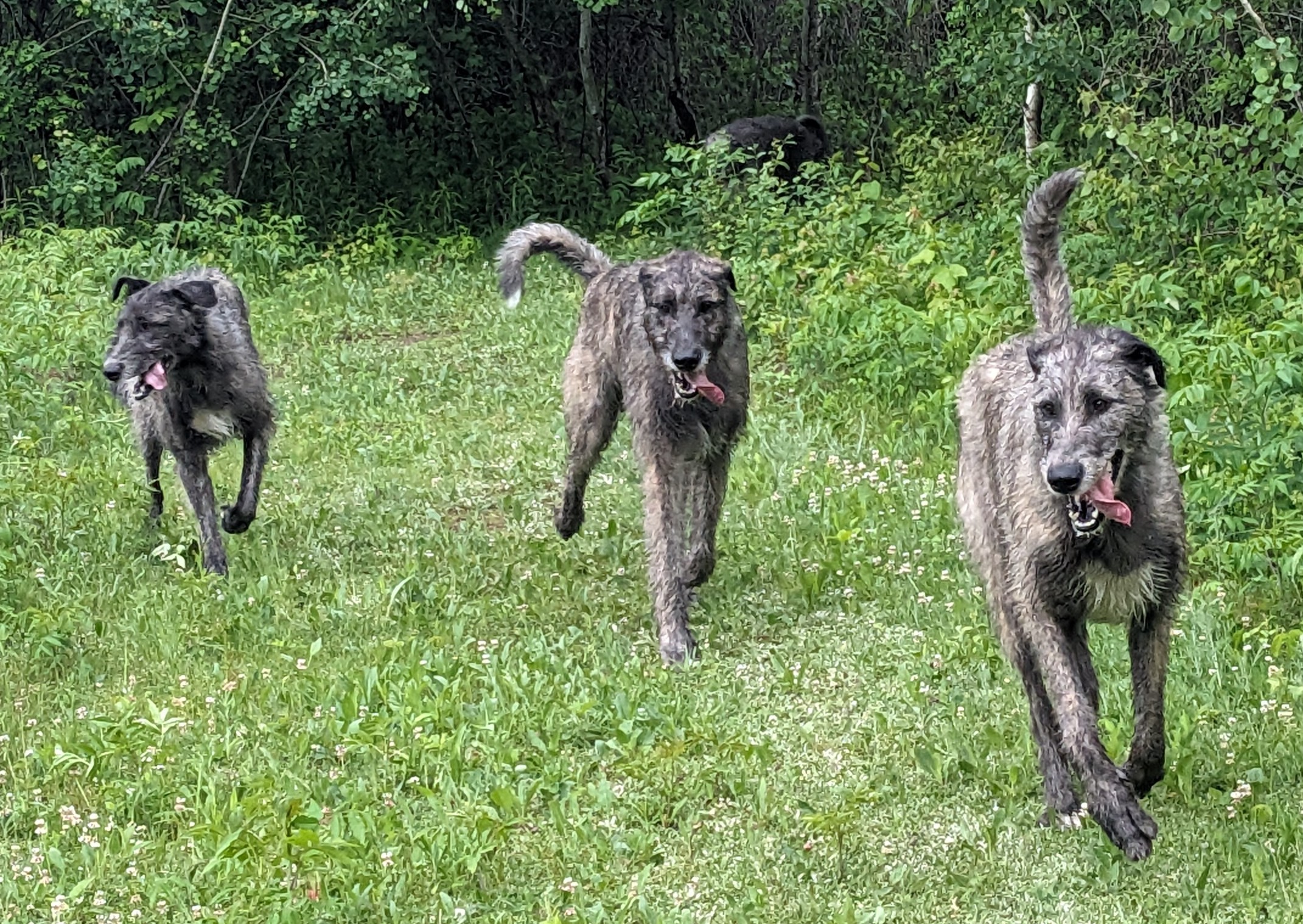
For people that have met Irish Wolfhounds, the initial comments are usually on their size and how calm they are. I hear countless times on any excursion with the hounds that they are someone’s “dream dog.” Once upon a time, they were my dream dog, too. Now my entire life is devoted to them. I wonder if many of these people have completely thought through what owning and living with a dog of this size entails.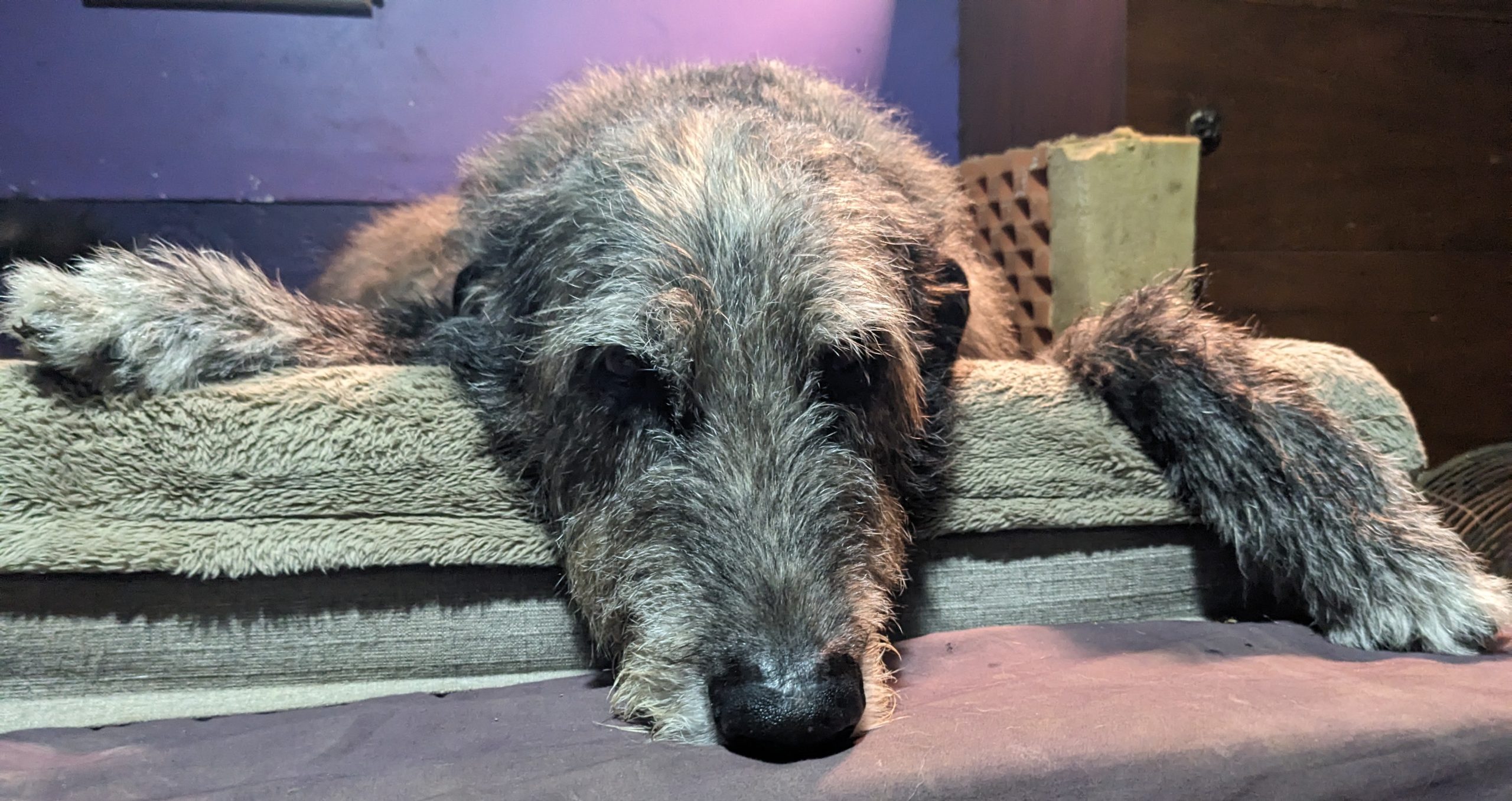 Irish Wolfhound are related to greyhounds, so they are a running breed and hunters by sight. A securely fenced yard of adequate height and durability is necessary to have them at home. The sighthound instinct cannot be trained out of them. They love to run, they chase, and they can and will kill prey animals including rabbits, birds, deer, outdoor cats, and many other things if given the chance. Then they return to their gentle couch potato manner. A lower prey drive puppy can sometimes be trained to accept outdoor cats. I have known several wolfhounds that were fine with indoor cats, but also have known some who absolutely were not. They also need to be exercised appropriately – gentle as they grow but enough to keep them well muscled and then walks with their people as they get older – they can be prone to laziness as they age. They need activity and muscling to keep in optimum shape especially as they age. Do you have a large, safe, fenced in property, and the time to keep giant hounds exercised and in good shape?
 Having a dog of this size in your house means that mud and snow and dirt from outside gets tracked in on a large scale. Their tail can sweep off a coffee table or send anything breakable (cups, knicknacks, etc.) flying. They can reach the kitchen counters, the table, and even on occasion the top of the refrigerator. If it is raining, they shake off, and water and mud goes flying everywhere. They have a drink of water and there are puddles on the floor. Food can be consumed enthusiastically, and a similar mess can remain in their eating station. Are you prepared for this level of mess in your house and the clean up?
Irish Wolfhounds are very large dogs. Show dogs are stripped out, but even a pet must be routinely brushed out, mats removed, ears cleaned, ear hair removed to help keep the ears clean, nails trimmed, and bathroom areas clipped or scissored to keep sanitary. They also need to be bathed routinely. This requires a special set up for bathing at home: either warm water access outside or an easy walk in/extra large shower inside, or an accommodating groomer. You will also need to continue train your wolfhound to accept nail trimming and brushing and purchase the necessary tools. Are you willing to maintain the grooming, hygiene, and cleanliness of a giant dog?
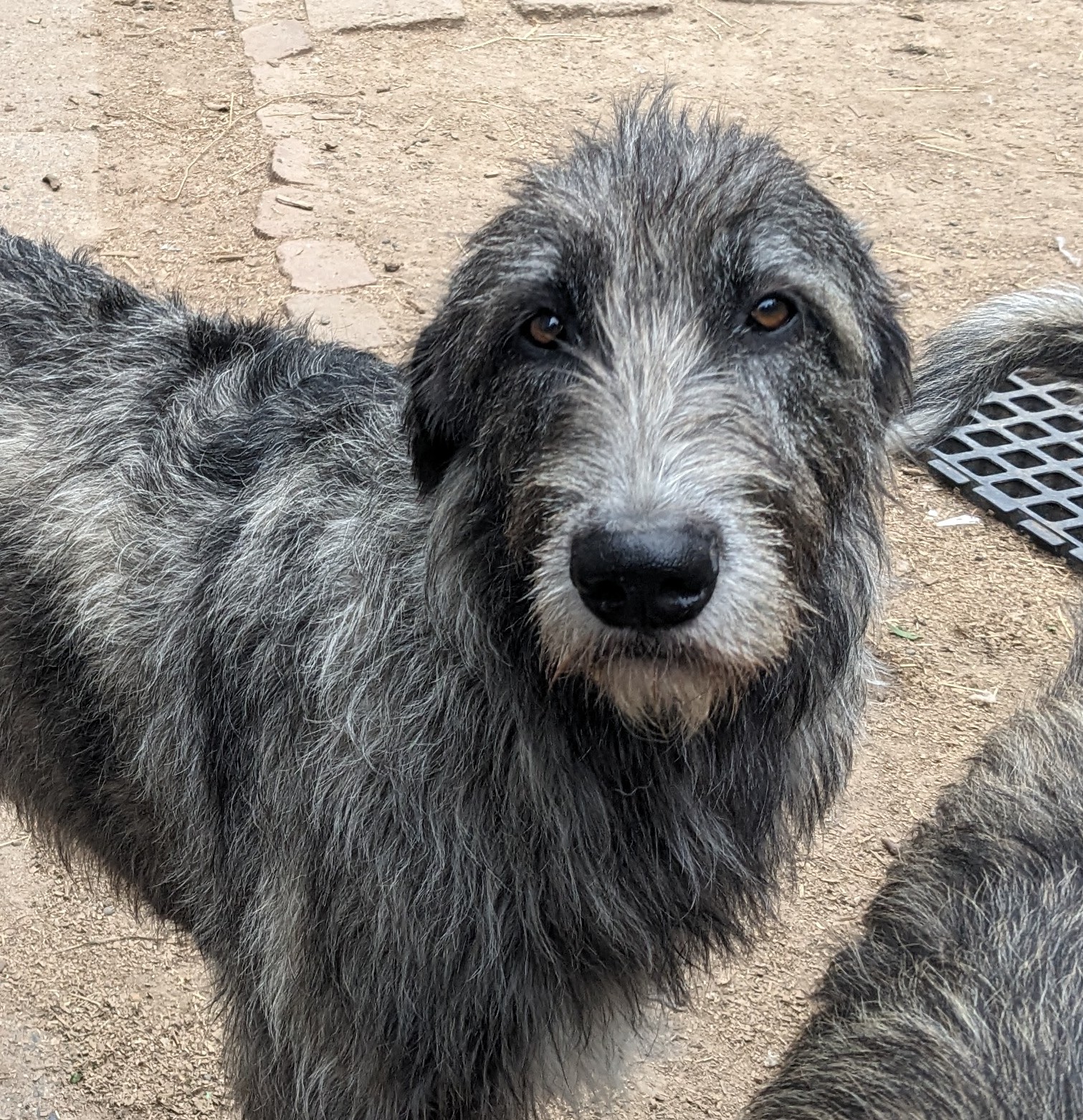
Puppies need to be raised with the utmost care, because they are babies…but babies who will weigh around 100 pounds at 6 months of age. They can be clumsy as they grow so fast and have destructive and energetic moments just like any puppy…but on a much larger scale. You cannot be heavy handed or use negative reinforcement training with a wolfhound unless you want them scarred for life. They need gentle yet firm positive reinforcement training, socialization, and basic training. Especially early leash training before they get too heavy to be able to pull harder than the average person weighs. Do you have the time and patience to cater to a giant puppy’s needs?
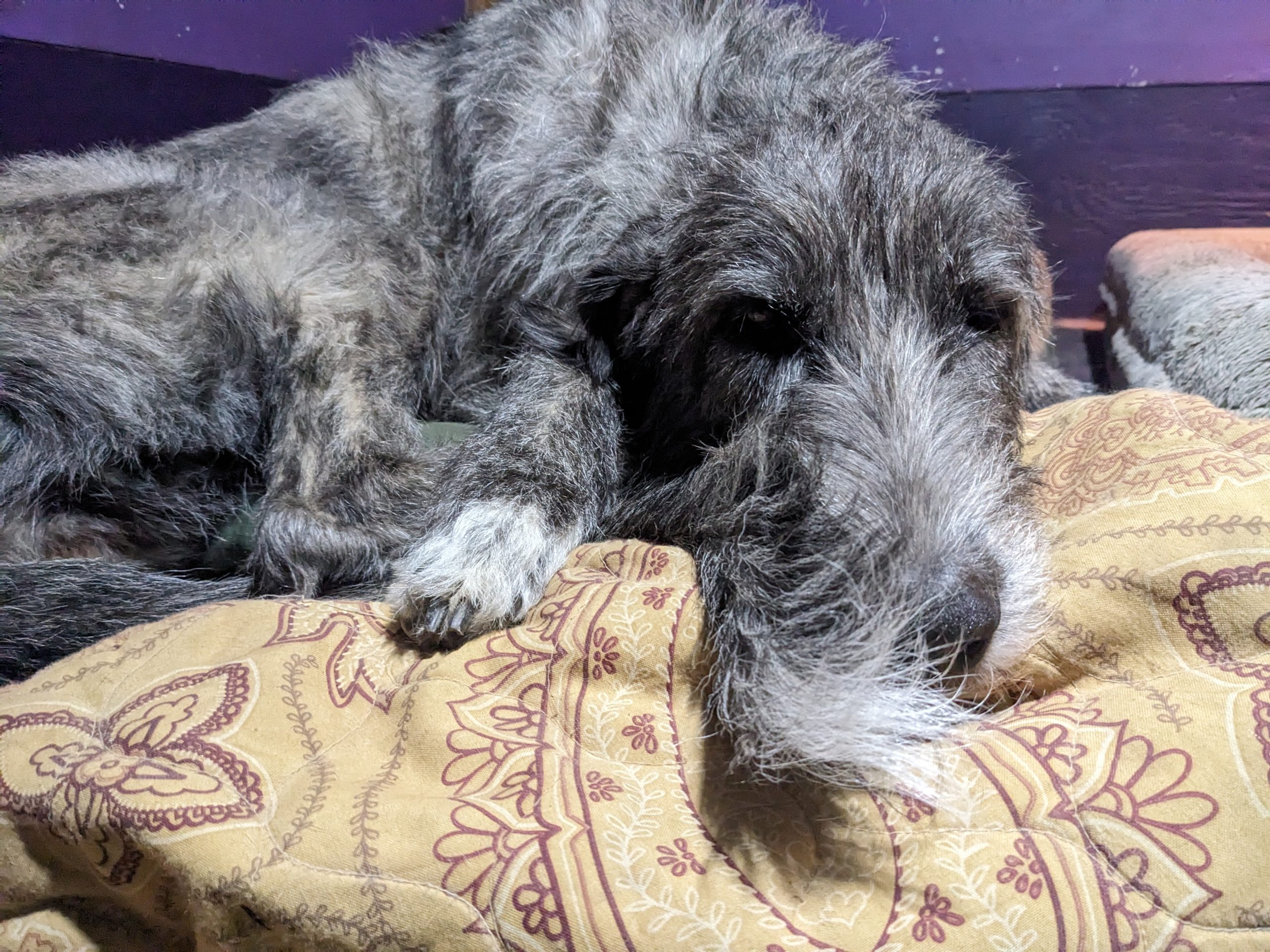
Irish Wolfhounds have this otherworldly nature about them. They have kind and gentle souls. They love their family and people. They will be completely devoted to you if their needs are fostered. If you do not make them a part of your everyday life and a part of everything, their gentle spirit withers. If you constantly leave them behind in kennels or expens, their spirit flags. They know so much about their people and often know when you could use a hug or a gentle lean after a bad day or even when you are not feeling well. I have even had my dogs perform antics such as rolling on their backs with their legs in the air just to get me to smile. This will not develop if there is no bond formed and nourished. Do you have the time and energy to be as devoted to them as they are to you?
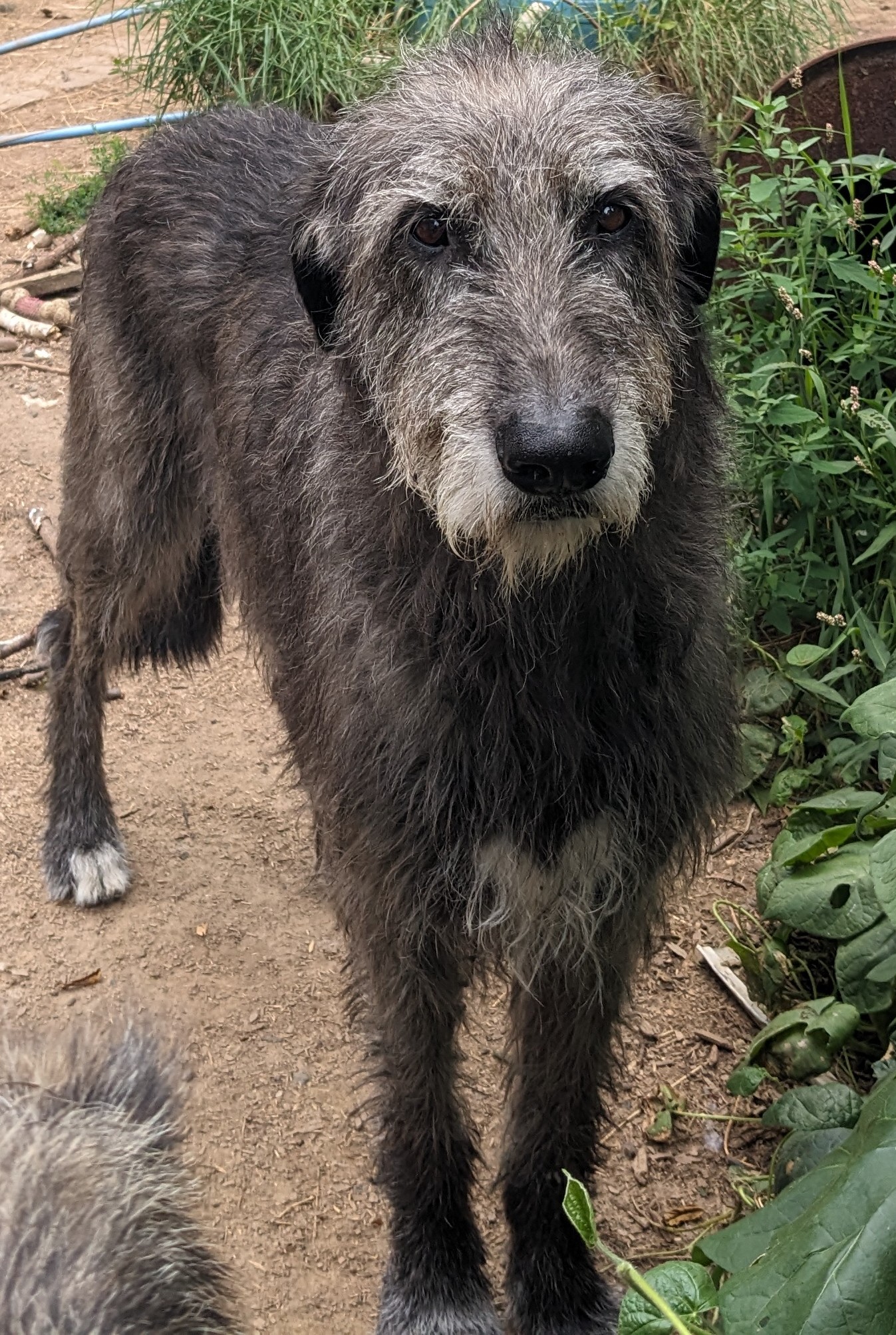
Irish Wolfhounds are silent sufferers, and they can be deathly ill and only show the slightest change in behavior. This needs to be monitored closely to catch health issues as quickly as possible. They can get devastating heart disease, cancer, pneumonia, bloat and a twisting of the stomach. These are all emergency situations that need emergency veterinary care. Add into that the cost of antibiotics, flea, tick, and heartworm prevention and any other maintenance medications are just that more expensive for a very large dog. Food, treats, beds, and other care items are also needed on a larger scale. Are you prepared for this cost?
Irish Wolfhounds grow fast as babies, take forever to mature, and then pass away often far younger than other breeds of dogs…sometimes from tragic things. Average life expectancy for the breed on average is about 7 years. That mean some die younger and some die older. I lost my youngest at a year old due to a resistant spinal infection, followed by aggressive pneumonia due to a bad heart at age 2, and a rare cancer at age 3. The older ones have passed from kidney disease, bone cancer, splenic cancer, heart failure, resistant pneumonia, and throwing a clot to the spine leaving the dog in extreme pain yet paralyzed in the rear end. Do you have the capacity to accept their fate and willingly embrace the heartache?
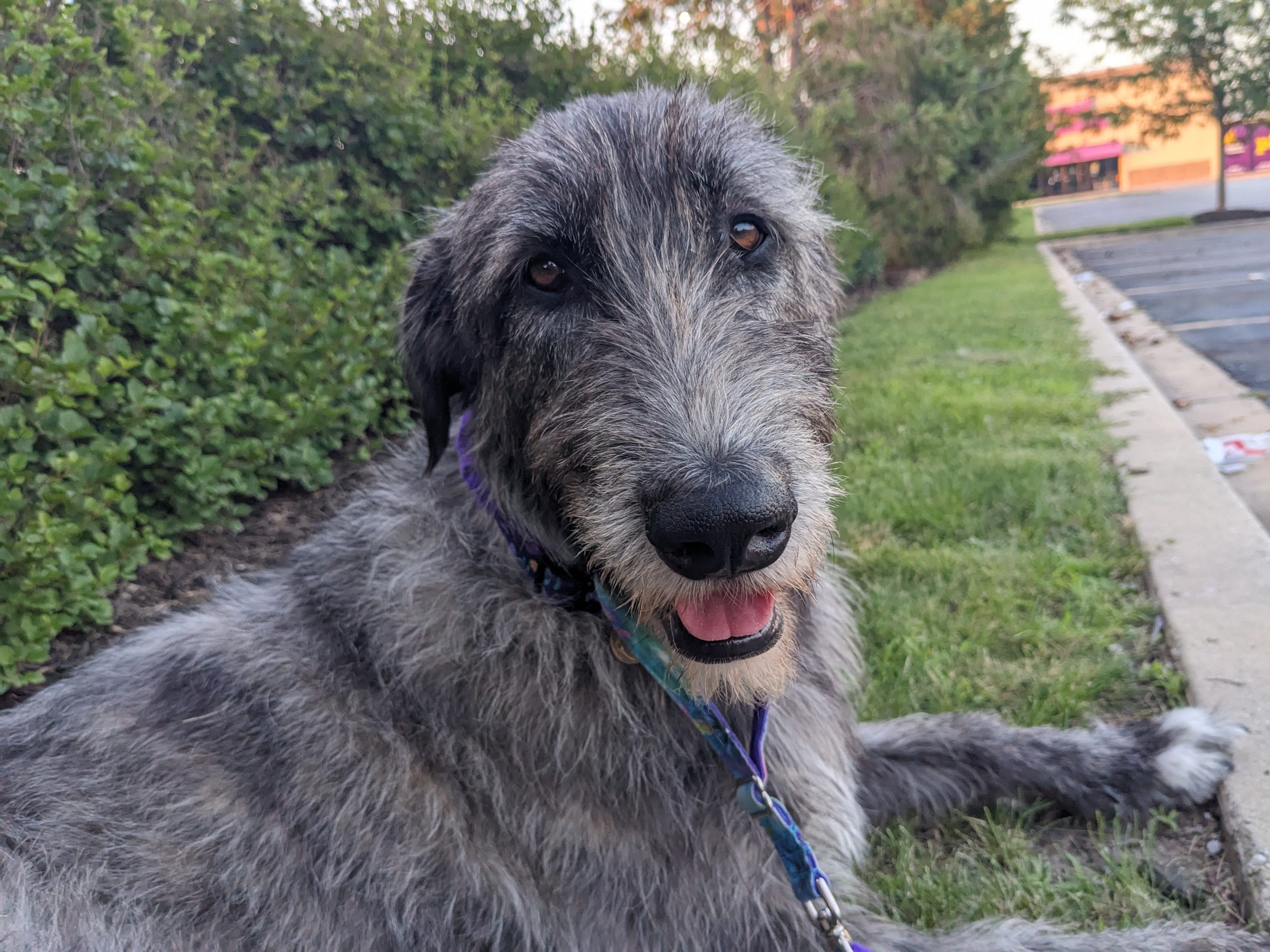
If you made it through all of this and think you have the time, energy, and devotion to nurture the soul of an Irish Wolfhound, then when one enters your life, you will have an unforgettable companion and life changing friend. They deserve the world – to have all their needs met, and their joy fulfilled. The greatest reward is to see them every day. They have many things to teach us including patience, tolerance, humility, and above all else to cherish every single moment.